Introduction
Genetics, Plant Breeding, and Seed Science (abbreviated as Gen. Plant Breed. & Seed Sci.) is a peer-reviewed scientific journal dedicated to advancing research and knowledge in the fields of genetics, plant breeding, seed science, and related disciplines. The journal provides a platform for the publication of high-quality research that covers a wide scope, including agrobiodiversity, horticulture, agronomy, biotechnology, and biostatistics. We welcome submissions that explore the genetic improvement of crops, the conservation and use of germplasm, and innovative breeding techniques.
Published by the Plant Breeding and Genetics Society of Nepal (PBaGSoN), the journal supports contributions in both English and Nepali, reflecting the diverse international audience and fostering accessibility for researchers from various linguistic backgrounds. With an online editing system, Gen. Plant Breed. & Seed Sci. aims to facilitate a streamlined publication process, ensuring the rapid dissemination of groundbreaking research in plant science.
ISSN
The journal holds an International Standard Serial Number (ISSN) 3102-0089 for its print edition and ISSN 3102-0151 for the online version.
Aims and Scope
Aligned with the mission of PBaGSoN, the journal has prioritized six cross-cutting areas of agriculture—genetics, agrobiodiversity, seed science, breeding, biotechnology, and biostatistics (GAS-3B)—providing a broad and comprehensive scope of expertise.
This journal aims to provide a platform for researchers, practitioners, and educators to share knowledge and insights that contribute to the advancement of plant science and agriculture. We are committed to publishing rigorous and impactful research that fosters collaboration and drives progress in the field.
The Genetics, Plant Breeding, and Seed Science aims to:
We welcome original research articles, reviews, and theoretical contributions in the following areas:
Plant Genetics:
Plant Breeding:
Seed Science:
Applications and Innovations:
Agro-Biodiversity:
Interdisciplinary Studies:
Copyright Policy
The article is published under the Creative Commons Attribution-NonCommercial 4.0 International (CC BY-NC 4.0) license. This license permits others to share, modify, and build upon the content for non-commercial purposes, as long as proper credit is given to the original author(s). Detailed information about this license can be found at: https://creativecommons.org/about/cclicenses/.
Upon acceptance of the article, a copyright agreement form will be sent to the author(s). They are required to carefully review the form, sign it, and return a scanned copy to the journal office within the specified timeframe.
Peer Review Policy
All manuscripts submitted to the journal undergo a single-blind peer review process. Upon submission, the Managing Editor assesses the formatting and scope of manuscripts. Then s/he assigns the manuscript to a suitable Editor, who ensures that at least two independent reviewers evaluate it. Authors are encouraged to suggest five potential reviewers without any conflicts of interest, although the Editorial Board retains full discretion in reviewer selection.
The responsibility for addressing all reviewer and editor comments lies with the authors. Revised manuscripts retain the original manuscript ID with an “R” designation (e.g., GPBSS-24-01-ST-R1) and may be reviewed again if necessary. Authors are expected to submit revisions within four weeks; otherwise, the manuscript may be withdrawn and must be resubmitted as a new submission. The average time from initial submission to final decision is approximately 15 weeks, including the initial evaluation (2 weeks), peer review (4–6 weeks), revision period (4 weeks), and subsequent evaluations and decisions. All manuscripts are screened for plagiarism using iThenticate® before publication, with a similarity index of 10% or less considered acceptable.
Authors are also encouraged to include their ORCiD and institutional email addresses in the manuscript.

Editor-in-Chief
Asst. Dean (Academics) at Institute of Agriculture and Animal Science, Tribhuvan University, Kirtipur, Kathmandu, Nepal
E-mail: info@iaas.tu.edu.np
Interests: Horticultural Plant Genetic Resources, Viticulture, Fruit Breeding, Fruit Trees, Flavonoid Biosynthesis, Plant Molecular Biology, Plant Tissue Culture

Editor
Associate Professor at North Carolina State University, USA, 455 Research Drive, Mills River, NC 28759
Email: dilip_panthee@ncsu.edu

Editor
Chief and Senior Scientist at National Plant Breeding and Genetics Research Centre, Nepal Agricultural Research Council, Lalitpur, Nepal
Email: krishnahari.ghimire@narc.gov.np
Interests: Plant Breeding and Genetics, Plant Genetic Resources Conservation and Management, Molecular Biology, Agrobiodiversity Conservation, Seed Science and Technology

Editor
Senior Scientist at National Rice Research Programme, Nepal Agricultural Research Council, Dhanusha, Nepal
Email: nrrpjnk@gmail.com
Interests: Plant Breeding and Genetics, Plant Genetic Resources Conservation and Management, Agrobiodiversity Conservation

Editor
Coordinator and Senior Scientist at National Sugarcane Research Programme, Nepal Agricultural Research Council, Jitpur, Bara, Nepal
Email: srpnarc@gmail.com
Interests: Plant Breeding, Plant Tissue Culture, Microbial Biotechnology, Biological Control and Agrobiodiversity

Editor
Program Sub-Coordinator at Resilient High Value Agricultural Programme (R-HVAP), Project implementation office, Kirtipur, Kathmandu, Ministry of Agriculture and Livestock Development, Nepal
Email: m.khatiwada1@gmail.com
Interests: Seed Sector Development and Regulation, Climate Change and Agriculture, and Inclusive Agriculture Development
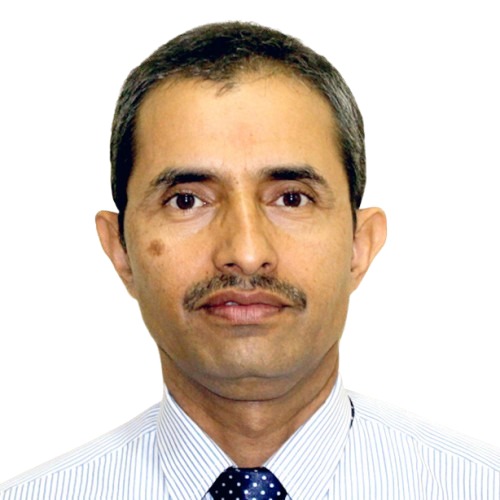
Managing Editor
Senior Manager at Sean Seed Service Center Limited, Kathmandu, Nepal
Email: damodar.poudyal@seanseed.org.np
Interests: Crop Research, Plant Breeding and Genetics, Abiotic Stress Physiology, Photosynthesis, Plant Phenotyping, Agricultural Biodiversity, Seed Production, Seed Science and Technology, Seed Analysis
Dear Reviewer,
We hope this message finds you well.
We are reaching out to invite you to consider becoming a reviewer for the journal Genetics, Plant Breeding and Seed Science. As part of our ongoing commitment to maintaining the highest standards of scientific rigor and integrity, we are seeking qualified experts to provide insightful and constructive reviews for submitted manuscripts in the field of genetics, agrobiodiversity, seed science, biostatistics, breeding and biotechnology.
By becoming a reviewer, you will play a pivotal role in ensuring that the research we publish is of the highest quality, advancing our collective understanding of these crucial areas in agriculture and biology.
Reviewing Responsibilities:
If you are interested in joining our team of reviewers, please provide basic information by CLICKING this link.
Dear Esteemed Reviewers,
Warm regards from the Journal!
We recognize that you bring considerable expertise to the review of scientific manuscripts. To ensure a smooth and consistent review process, we recommend that you review the following materials.
Peer review plays a crucial role in maintaining the quality of our publications. Every manuscript submitted to our journals undergoes a rigorous review by experts to uphold the highest standards. We are here to assist you at every stage and provide you with a range of resources, tips, and strategies to enhance your review experience.
You are requested to use this form MS Word document OR provide your final recommendation to accept/ reject/ revise the manuscript with the peer reviewed manuscript in Track Changes View, and kindly forward it to the Managing Editor at genetics.pbss@gmail.com.
Before accepting or declining an invitation to review, please consider the following:
Some important considerations:
By reviewing the manuscript of your field of expertise, the journal brings the following benefits:
Our journal requires that peer reviewers submit their review reports in English upon completion of the review. Below are some general instructions to guide you in preparing your report:
For additional guidance on writing a critical review, please refer to the following resources:
When preparing your review report for research manuscripts, please address the following comprehensive set of questions to ensure a thorough evaluation:
If you identify any instances of scientific misconduct, fraud, plagiarism, or other unethical behavior related to the manuscript, please report these concerns to the Managing Editor immediately.
Please provide your overall recommendation for the manuscript's next processing stage based on the following options:
Please note that your recommendation will be visible only to the Managing Editor and not to the authors. All decisions regarding revisions, acceptance, or rejection should be thoroughly justified.
Article types
Full papers should include unique research, analytical reviews, or descriptive manuscripts. The journal also features technical advancements, data notes, and letters to the editor.
Research article: Original research articles should present new findings that improve understanding of a research topic. For example, studies on genotyping, gene expression, GWAS, and gene family analysis should provide functional insights, such as biological hypotheses and validation or characterization of gene functions, rather than just descriptive results. Original research summarizing trial results from field, growth cabinet, or other settings, depending on the nature of the trials, should ideally be repeated across multiple seasons, locations, or both, as relevant. The minimum degrees of freedom should exceed 12.
Research note: Research findings from a single season or location may be accepted as a Research note if the results are of exceptional significance.
Review article: Comprehensive papers should interpret data mainly from previously published research, supplemented by new experimental observations.
Resources and infographics: It features infographics and posters documenting registered or notified biodiversity, spanning crops, wild species, microbes, and more within defined agroclimatic zones. Authors are required to deposit materials in the National Gene Bank of Nepal and obtain accession numbers. The publication also provides a standardized system for naming, describing, and promoting the availability of genotypes.
Survey article: A survey article provides a comprehensive overview of a specific topic or field, summarizing and synthesizing existing research. It highlights trends, challenges, and future directions, making it useful for researchers new to the area.
Germplasm and registration: This type of manuscript documents the development, identification, and registration of new germplasm, crop varieties, or genetic resources in Nepal and beyond.
Advertisements: Advertisements are non-scientific content submitted by companies, institutions, or individuals to promote products, services, events, or announcements relevant to the journal’s audience.
Perspective (Opinion/ vision article): Papers should provide a broad, personal viewpoint on a specific topic, often based on interpreting previously published data related to plant breeding and genetics.
Software and AI, and other technical advances: Papers should focus on software, AI tools, and apps, experimental techniques, method enhancements, new investigative tools and equipment, inventions or experimental improvements that greatly improve genomic data, and understanding in plant breeding and seed science. They can present novel findings without requiring extensive background or discussion.
Invited review: The journal may request review articles that are comprehensive and interpret previously published data on plant breeding and genetics.
Letters to the Editor: These offer an opportunity for discussing particular themes and are subject to editorial review. Letters should be no longer than 300 words.
Publication review: A brief description of books or publications related to plant breeding, genetics, and seed science.
Language of the manuscript
Manuscripts must be written in clear, high-quality English, using either British or American style consistently throughout. Authors are responsible for ensuring correct grammar, spelling, and overall language quality. Submissions to the Germplasm and Registration section may be in Nepali; however, an English version of the title and abstract is required.
The journal will organize all submitted manuscripts under the following sections. The Editorial Board may select from these categories and update them as needed. The code in parentheses is the discipline code and will be used to assign a number to each paper upon receipt.
Special Sections: The journal includes special sections that spotlight emerging research in plant breeding and genetics, encouraging scientific exchange from symposia, collaborations, and conferences. These peer-reviewed sections offer expert-driven updates on current advancements. To propose a section, authors must submit a one-page proposal to the Managing Editor, including the title, abstract, sample topics, contributor list, and suggested guest editors as a year-long project. Proposals must align with a thematic area of the journal.
Process of manuscript submission
The submission system is fully online and automated. Before initiating the submission process, prepare the documents like a cover letter, the main text of the manuscript, and supplementary files. First, you need to identify the type of article, then select the suitable section of your manuscript. Manuscripts should not have been published in full previously or submitted to other journals for consideration at the same time. Authors must declare any prior publication or submission, or originality, and the entirety of their manuscript. Copyright transfer is a must to prepare and submit during the initial submission.
In the main text, you need to provide a statement of generative AI, data availability commitment, conflict of interest declaration, and authors’ responsibility. Other documents like study highlights/graphical abstract, plain language summary, etc., are optional. Authors should have their manuscripts reviewed by colleagues before submission. Typos, spelling errors, and grammatical mistakes can result in immediate rejection, so ensure your manuscript is thoroughly checked for punctuation and spelling. Consulting additional experts to verify the manuscript's scientific value and clarity is recommended.
Page limit and formatting
Review and revision process
Submitted manuscripts are subjected to a single-blind peer review process. Each paper is handled by the Managing Editor, who will contact a suitable Editor for the review, ensuring at least two evaluations. Authors are encouraged to propose at least five potential reviewers, ensuring there are no conflicts of interest with the authors or the manuscript. The editorial board reserves the right to disregard any suggested reviewers. Authors are responsible for implementing all revisions during the review phase. Revised manuscripts will maintain the same identifier, with an additional “R” number (eg, GPBSS-24-04-ST-R1), and each revision may be reviewed again. Authors have four weeks to address the reviewer and associate editor's comments and return their revised manuscript. If revisions are not submitted within this timeframe, the manuscript may be released and will need to be resubmitted as a new paper. On average, it takes about 15 weeks from submission to the final decision, including the entire peer review process and revisions. Here’s the typical timeline:
ORCID and email: We recommend that all authors include their Open Researcher and Contributor ID (ORCiD) and institutional emails (preferably) in their manuscripts.
Plagiarism screening
All papers submitted to the journal undergo a plagiarism check before the review process. If significant overlap with other sources is detected, the editor will assess the extent of the similarity and follow appropriate measures. Every manuscript submitted to our journal for publication consideration undergoes a plagiarism check with iThenticate®. Generally, a ≤10% similarity index is acceptable.
Manuscript requirements
Authors are required to follow the guidelines while formatting their manuscripts. They are requested to submit their manuscript as a Word document, including the title, abstract, text, figures, tables, and references. The submission must include the following components:
Tables and figures, along with their captions, should be incorporated into the text document at their initial reference. If your manuscript is approved for publication, you will also need to submit the figures separately as high-resolution image files in one of these formats: PDF, EPS, TIF, or JPEG.
Manuscript structure
Manuscripts should be submitted as a Microsoft Word document or in LaTeX format for evaluation. Ensure the document is typed with double spacing, includes plain page numbers at the bottom right corner of the page.
Title: Should be brief and informative, providing the reader with a clear understanding of the article's content. Preferably length is of 12 to 15 words excluding conjunctions and prepositions.
Authors: Beneath the title, include the names of all authors. Add an integer after each author's name and an asterisk next to the corresponding author’s name (i.e., the individual working as contact person on behalf of coauthors). The author who played the primary supervisory role should be listed last.
Affiliations: In the second paragraph, list all authors with their affiliation, email, and ORCID. The first sentence should include the authors' names (without any professional titles) along with their full and current addresses. The second sentence indicates the current address of the author(s) (who have moved from the original address) if different from the previously mentioned address.
ORCID and email: Authors are encouraged to provide their ORCIDs and institutional emails (if not available, personal email IDs) on the author page.
Research highlights/graphical abstract (OPTIONAL): The major findings of the study should be summarized either as a clear take-home message in 2 – 3 sentences or presented in a graphical abstract that highlights the key steps and results. This visual should summarize the study's main outcomes, methods, and key insights, allowing readers to quickly grasp the essential takeaways. Each point should consist of 15-20 words, highlighting the key findings of the current submission. These concise, bullet-pointed texts should showcase the most important outcomes and capture the significance of the study, along with its consequences for readers. Study highlights from the accepted manuscript can be utilized for spreading the research findings.
Plain language summary (OPTIONAL): This plain language summary (PLS) is intended for scientists in other fields, researchers across disciplines, undergraduate and graduate students, and readers who may not be fluent in English. Authors should write the PLS in simple terms that a layperson can understand. The PLS should be understandable, brief, engaging, and free from jargon. Focus on your results, what you discovered, and its significance rather than on methods. The goal is to attract readers to the journal and your research. Avoid using abbreviations. The summary should consist of five to six sentences, starting with one or two sentences explaining the issue or problem, followed by a description of your discoveries, key findings, or conclusions, and the implications of the results. PLS for the journal are limited to 150 words.
Main text
The main text begins with the manuscript title. Structure the main text of the manuscript as follows:
The first author is responsible for providing a list of co-authors who have made genuine, direct contributions to the manuscript. Authors are encouraged to limit the number of co-authors to no more than seven. Inclusion of unverified authors may result in immediate rejection of the manuscript. Clearly state each author's specific contributions to the work. Note that this section cannot be modified after acceptance, so please ensure all information is accurate before final approval.
Example:
AB and BC were the primary architects of the study's design.
AB established the theoretical framework and conducted the experiments, while CD and DE assisted with the data analysis.
BC oversaw the entire project.
All authors engaged in discussions regarding the results and contributed to the final manuscript.
For GWAS studies, authors must provide the raw phenotypic and genotypic data either as a supplemental table or as a link to a data repository to enable subsequent meta-analyses by other researchers. The metadata should fully describe the experimental conditions. Additionally, for GWAS studies, a supplemental table (or link) should include: (i) the SNP allele scored, (ii) its position relative to a reference sequence (or provide adjacent context sequence), and (iii) the p-value for each trait and each SNP.
Example of statements:
Citation style
Authors must follow the PBaGSoN-Style of referencing and citation. The author-year citation system is required; please do not use numbered references. Authors are strongly encouraged to use the Mendeley Reference Manager and a version of Microsoft Word 2016 or later. Consider the following guidelines when formatting your references.
Example of in-line citation:
The germplasms conserved at the National Genebank of Nepal represent valuable future assets for the country (Paudel and Joshi 2018). Among them, Akabare chili is a landrace that holds significant socio-cultural value and is economically profitable (Poudyal 2024, Poudyal et al. 2023a, 2023b). According to the field study by Poudyal et al. (2024), farmers in Nepal can achieve up to 50% net profit from Akabare chili cultivation.
Example of bibliography:
Journal article:
Poudyal D, BK Joshi and KC Dahal. 2024. Insights into the responses of Akabare chili landraces to drought, heat, and their combined stress during pre-flowering and fruiting stages. Heliyon 10(16):e36239. DOI: https://doi.org/10.1016/j.heliyon.2024.e36239
Poudyal D, BK Joshi, R Zhou, C-O Ottosen and KC Dahal. 2023b. Evaluating the physiological responses and identifying stress tolerance of Akabare chili landraces to individual and combined drought and heat stresses. AoB PLANTS 15(6):1–14. DOI: https://doi.org/10.1093/aobpla/plad083
Book:
Borges JL. 1999. Selected non-fictions. Viking, New York.
Shakya SM, D Baral, GK Shrestha and DM Gautam. 2019. Fundamentals of Horticulture (2nd ed.). Institute of Agriculture and Animal Science, Tribhuvan University, Rampur; pp.50-67.
Pun U. 2017. Flower production in Nepal. Jagadamba Books, Kathmandu.
Discussion paper:
Ahlquist JS and C Breunig. 2009. Country clustering in comparative political economy (MPIfG Discussion Paper No. 09–5). Max-Planck Institute for the Study of Societies, Cologne.
Edited book:
Dahal KC (ed). 2020. Horticulture in Nepal. Laligurans Press, Kathmandu.
Poudel PR, KC Dahal, and SM Shakya (eds). 2019. Horticulture in Nepal: Prospects and problems. Nepal Books.
Dunnett N and N Kingsbury. 2008. Planting green roofs and living walls, 2nd ed. Timber Press, Portland, OR.
Hancké B, M Rhodes and M Thatcher (eds). 2007. Beyond varieties of capitalism: conflict, contradiction, and complementarities in the European economy. Oxford University Press, Oxford and New York.
Conference proceedings:
Poudyal D, BK Joshi, KP Singh, SM Shakya and KC Dahal. 2023. Akabare chili amplifies the household income of farmers in the mid-hills of Nepal. In: Proceedings of 2nd International Conference on Horticulture: Advancing Horticulture in Changing Climate and Biodiversity. Nepal Horticulture Society, 3-4 April 2023, Godavari, Lalitpur; pp.1–26.
Mares I. 2001. Firms and the welfare state: When, why, and how does social policy matter to employers? In: PA Hall and D Soskice (eds). Varieties of Capitalism. The Institutional Foundations of Comparative Advantage. Oxford University Press, New York; pp.184–213.
Dissertation:
Poudyal D. 2024. Physiological Responses of Akabare Chili Landraces to Drought and Heat Stress Conditions. Tribhuvan University. DOI: https://doi.org/10.13140/RG.2.2.13763.82727
McInnis MD and LP Nelson. 2011. Shaping the body politic: Art and political formation in early America. University of Virginia Press, Charlottesville, VA.
Pandey B. 2020. Morphological characterization and genetic diversity mapping of local mango genotypes using microsatellite (SSR) markers in the far western hills of Nepal [Unpublished master thesis]. Institute of Agriculture and Animal Science, Tribhuvan University.
Website citation:
CSL search by example (WWW Document). n.d. Citation Style Editor. URL: http://editor.citationstyles.org/searchByExample/. Accessed: 15 Dec. 2012.
Yo-yo has a modifiable string gap. 2011. WO2011US30214.
Personal communication: In general, we discourage citing the information as personal communication. However, if it is needed, give the first and family name of the information provider along with the date of communication (Madan Rai, personal communication, Mar 2, 2025). Personal communication should not be included in the reference list.
NOTE: Only the papers directly related to the authors' work should be cited in the text. Only literature accessible through libraries or other readily available public sources may be cited. All publications listed under “References” MUST appear in the running text with the author’s name (without initials) and year of publication (eg, Poudyal, 2023), but authors with more than two may be cited by et al. (eg, Poudyal et al. 2023) after the first author.
Submission: Supplementary materials should be submitted either as a separate file or included at the end of the manuscript, following the References section.
More about supplementary information
Supplementary information must be submitted alongside the manuscript and will undergo peer review. Authors are encouraged to use this material to enhance the article's content and quality or to help shorten the manuscript text. Examples of supplementary information include experimental data, apparatus schematics, study site maps, or other content primarily of interest to specialists. If supplementary information is used to reduce the manuscript length, ensure that the Materials and Methods section contains enough detail for readers to evaluate whether the explanations are backed by the data.
Supplementary tables and figures should be referenced in the main text sequentially as Supplementary Table S1, Supplementary Figure S1, and so forth.
Prepare a cover page in the supplementary information with the title and authors. List the Tables and figures in the sequence as they appear in the main text. Submit supplementary information in a single PDF, MS Word, MS Excel, or QuickTime. FLV (Flash Video) files with a resolution of 640 x 480 or 720 x 480 (widescreen) are acceptable. However, executable files (.exe), JavaScript, TeX, and PowerPoint files are not allowed.
Math equations and formulae: Request to utilize keyboard formatting as far as possible, including italics, bold, subscripts, superscripts, simple variables, and Greek fonts. If more advanced formatting is necessary, preferably suggested to utilize MathType or the Word Equation Editor (when MathType is unavailable).
Units of measurement: Use SI units for all measurements. Alternative units of measurement may be included in parentheses after the SI unit if they enhance clarity or are essential to reproduce the results.
Data availability policy: A fundamental principle of publication is that others should be able to replicate and build upon the authors' claims. The journal mandates that the data necessary for understanding, assessing, and expanding upon the reported research be accessible during peer review and publication. Additionally, any source code for specific or custom scripts required to reproduce the results should be submitted to a public repository, such as GitHub, or included as supplemental material. Any restrictions on the availability of materials or information must be disclosed to the editors at submission. In some cases, a six-month embargo may be granted. Note that the underlying data must be accessible upon submission.
Genome sequencing guidelines
The journal supports open access and FAIR data policies. For manuscripts describing genomic sequencing data (such as genome assembly, pan-genome, whole genome resequencing, or genotyping), the respective data (including raw data, assembly data, and variation information) must be deposited in appropriate public repositories (eg, NCBI SRA, EMBL ENA) and be publicly accessible upon publication. Data must also be accessible to reviewers during the review process.
Example data availability statements
Citing plant materials
When mentioning plant introductions, registered cultivars, germplasm, parental lines, accessions, and genetic stocks in the Introduction, Discussion, or Characteristics sections of the manuscript, authors are required to provide citations. This requirement also extends to genetic materials used in the development of unreleased plant populations that are central to the study, unless a more direct citation of the population's development is available.
Nomenclature
Upon their initial mention in the manuscript, authors should provide Latin binomial or trinomial (along with the authority) alongside the common name of plants, insects, pathogens, and animals studied in the work. Use the accepted common name and chemical name of pesticides at their first mention. For elements, ions, and simple compounds, use chemical symbols, except at the start of sentences or in titles and headings. For soils, specify at least the subgroup according to the US soil taxonomy system.
Changes to the author byline
Any modifications to the author list must receive approval from the Managing Editor at genetics.pbss@gmail.com. Furthermore, all coauthors must inform the Managing Editor that they are aware of and consent to the change in written form (eg, email).
Consent and approvals
The corresponding author should share a draft of the manuscript with each living coauthor for their approval on co-authorship. It is the sole responsibility of authors to obtain permissions for the use of personal photographs, graphs, figures, or other material from other publishers and must share these permissions with the editorial board upon acceptance of the manuscript. However, the editorial board retains the right to publish and republish those submissions.
Errata
Authors may submit errata to correct errors and omissions that impact the integrity of the published record. All corrections require editorial approval and must be approved by all coauthors before submission; only major corrections will be published. Direct all errata requests to the Managing Editor.
Publication charges
Genetics, Plant Breeding and Seed Science publishes all accepted manuscripts as open access, free of charge for authors of all nationalities. Printed copies can be produced, subject to the availability of sufficient publication funding.
Online publication
This journal employs an online-first publication system, where peer-reviewed and accepted articles are published with a DOI to facilitate the rapid dissemination of research and findings.
Other resources
For inquiries regarding submission formatting, submission process, or the submission status with the assigned identifier, please reach out to the Managing Editor at genetics.pbss@gmail.com.
Guidelines for Germplasm and Registration
The PBaGSoN and SQCC are pleased to announce the launch of a special section, Germplasm and Registration in our journal Genetics, Plant Breeding and Seed Science. This section aims to highlight the available germplasm (including cultivars, landraces, breeding lines, parental lines, wild species, genetic stocks, mapping populations, and other stable genotypes) used in agricultural production, research, alongside their registration through the publication of relevant manuscripts.
The primary goal of this section is to provide scientists, researchers, students, and farmers with essential information on released or pre-released cultivars, landraces, wild relatives, and parental lines, ensuring their availability for future research, breeding programs, and agricultural production.
Authors submitting manuscripts are responsible for confirming the availability and conservation of these materials in the National Genebank. Upon acceptance of a manuscript, the Editorial Board, in collaboration with the National Genebank and SQCC, will assign a unique registration number (accession number) to the germplasm. This number will be communicated to the author and indexed in designated volumes of the journal.
Manuscripts may be submitted in either Nepali (must type in Preeti or other Nepali Font, NOT using unicode) or English and can focus on a single genotype or include multiple genotypes within a single article.
Authors should submit a concise and well-structured manuscript along with a cover letter. The manuscript must include the following essential details:
Germplasm identification: Provide the name or identification of the germplasm (including an explanation of the name's meaning, if applicable), experimental number or designation, and the names of the agencies, organizations, or individuals officially releasing the genotype.
Materials and Medhods: Include a detail description of the experimental design, procedures, and analytical methods. Also mention the important dates while registering the variety developed and studied during the research.
Germplasm description: Include a brief description of the germplasm, emphasizing its distinguishing traits, breeding procedures, pedigrees, introductions, regions of adaptation, and key traits of agricultural importance.
Maintenance and distribution: Specify the name and contact details of the individual or organization responsible for maintaining and distributing the germplasm.
Passport and characterization descriptors: Incorporate passport descriptors, characterization descriptors, and other details typically required for Variety Release/Registration proposals in Nepal (refer to Seed Rules 2024 at www.sqcc.gov.np for further details). This ensures the manuscript meets the necessary standards.
Manuscripts must comply with the style and format of the journal. Alternatively, authors may structure their manuscripts under three to four main headings:
1. Introduction: An introduction to the germplasm.
2. Materials and Medhods: Include a detail description of the experimental design, procedures, and analytical methods.
3. Germplasm description: A detailed description of the germplasm.
4. Ethical and legal compliance: Confirming compliance with biodiversity laws and protocols
5. Maintenance and distribution: Information on the maintenance and distribution of the germplasm.
These short manuscripts may also be considered for characterizing accessions held in national and international plant germplasm collections, including descriptions of plant genetic materials. The submission and review process for these manuscripts follows the same procedures as for other articles in the journal.
Suggested headings for manuscript preparation:
Abstract
1. Introduction:
2. Materials and Methods:
3. Description:
4. Maintenance and distribution:
5. Ethical and legal compliance
Alternatively, full paper as in other section can be written and submitted.
Supporting figures and tables
References: As per the journal’s prescribed style, PBaGSoN Style. Authors can cite research relevant papers that describe the development, evaluation, or genetic characterization and any information related to this germplasm.
By adhering to these guidelines, authors ensure that the manuscript meets the required standards for the Germplasm and Registration section.
Please submit your manuscript ONLINE

Volume 1 Issue 1, July 2025
By Pradip Thapa, Sandip Bohara, Suprava Acharya, Aakriti Kawar, Alina Adhikari, Promise Shrestha, Bal Krishna Joshi, Damodar Poudyal
Read Full ArticleBy Aakriti Kawar, Raksha Sharma, Bhishma Raj Regmi, Nabin Ghimire
Read Full ArticleBy Surendra Lal Shrestha
Read Full ArticleBy Deepa Sharma, Samskriti Subedi, Bishnu Prasad Kandel
Read Full ArticleBy Dinesh Khanal
Read Full ArticleBy Bal Krishna Joshi
Read Full ArticleBy Dinesh Ghimire, Pramod Gyawali, Sabita Gyawali
Read Full ArticleBy प्रदिप थापा, बालकृष्ण जाेशी, निरञ्जन पुडासैनी, कृष्ण प्रसाद अधिकारी
Read Full ArticleBy Damodar Poudyal, Prakriti Poudyal, Prakash Acharya, Gopal Prasad Shrestha
Read Full ArticleBy प्रदिप थापा, निरञ्जन पुडासैनी, कविता जैशी पराजुली, बालकृष्ण जाेशी
Read Full Article